Startup Compliance Checklist
Starting a business in India involves much more than registering a company and opening a bank account. A startup compliance checklist helps founders identify the registrations, tax obligations, licences, employment requirements, intellectual property protections and recurring filings that may apply to their business. The exact requirements depend on the entity type, industry, turnover, location, employees […]
This guide explains the key compliance areas Indian founders should review before and after launching a startup. It is designed as a practical starting point, not a substitute for professional advice on your specific business.
What Is a Startup Compliance Checklist?
A startup compliance checklist is a structured list of the legal, tax, regulatory and administrative obligations that a business needs to identify, complete and monitor.
It normally covers both one-time requirements, such as incorporation and certain registrations, and recurring requirements, such as tax returns, statutory filings and licence renewals.
The checklist can be divided into six broad areas:
- Business structure and registration
- Tax and GST compliance
- MCA and ROC filings
- Employees and labour-related compliance
- Licences, intellectual property and contracts
- Industry-specific and data-related compliance
There is no single checklist that applies to every startup. A founder should first identify the business model and legal structure, then map the regulations that actually apply.
If you are still deciding which structure is appropriate, compare the available options before incorporating. Lawizer provides startup and business legal services, including Private Limited Company, LLP, OPC, GST, MSME and other registrations.
Startup Compliance Checklist Before Launch
Many compliance problems can be prevented before the first customer is acquired. The pre-launch stage is therefore a good time to establish the legal foundation of the business.
1. Choose the Right Business Structure
Founders should decide whether the business should operate as a Private Limited Company, LLP, OPC, partnership or another appropriate structure.
The choice affects ownership, liability, taxation, fundraising possibilities and ongoing compliance. A startup expecting external equity investment may have different requirements from a small professional business operated by two partners.
For founders considering a company structure, Lawizer’s Private Limited Company registration service provides an online incorporation route.
2. Complete Business Registration
Once the structure is decided, complete the applicable registration process and obtain the relevant documents. For a company, this generally includes incorporation documentation and tax identifiers such as PAN and TAN, where applicable.
Keep the Certificate of Incorporation, constitutional documents, director details and registered-office records safely organised. These documents are frequently required later for banking, tax, funding and other registrations.
Lawizer also provides a guide to Private Limited Company registration in India covering incorporation and post-registration considerations.
3. Check GST Registration Requirements
GST registration should be assessed based on the startup’s turnover, supplies, business model and applicable mandatory-registration provisions. Do not assume that every startup must register for GST immediately, but do not wait if the law requires registration.
GST obligations can also become relevant because of the nature of supplies or other statutory conditions. Thresholds and exceptions can change, so founders should verify the current position rather than relying on an old checklist.
For a practical overview, see Lawizer’s guide to GST registration for startups in India or its GST registration service.
4. Consider MSME or Udyam Registration
Eligible businesses can consider Udyam Registration under the MSME framework. The official Udyam portal states that registration is free and is handled through the Government of India’s official portal.
Udyam classification is based on the applicable investment and turnover criteria. Founders should check the current criteria before applying.
You can read Lawizer’s Udyam Registration guide or explore its MSME/Udyam Registration service.
5. Identify Business Licences
Some startups need additional licences or registrations because of what they sell, where they operate or how they operate.
- Food-related businesses may need FSSAI registration or licensing.
- Importers and exporters may need an Importer Exporter Code.
- Businesses may need local trade or establishment registrations.
- Manufacturing businesses may face factory, environmental or other approvals.
- Regulated industries may require sector-specific permissions.
Lawizer’s guide on business licences every startup may need explains why founders should build a licence list around their actual activities rather than copy another company’s checklist.
Startup Compliance Checklist After Registration
Incorporation is the beginning of compliance, not the end. Once the business is registered, founders need a system for recurring filings, accounting records, tax obligations and corporate documentation.
1. MCA and ROC Compliance
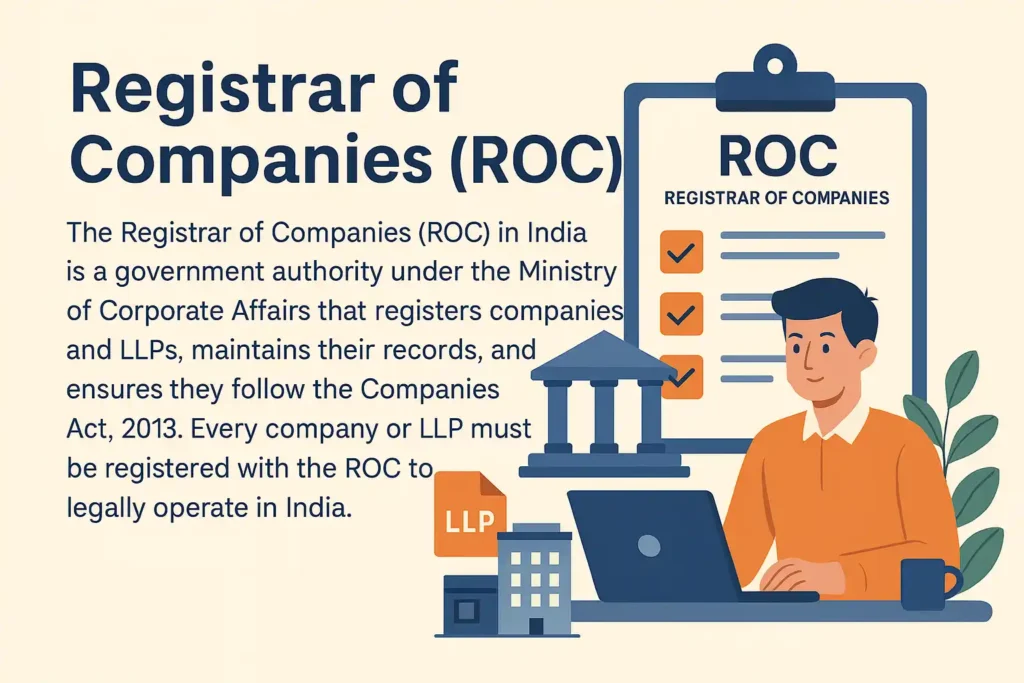
Companies registered under the Companies Act, 2013 have ongoing corporate compliance obligations. Depending on the company and its circumstances, these may include annual financial statement filings, annual returns, auditor-related matters, director-related requirements and event-based filings.
For example, forms such as AOC-4 and MGT-7 are commonly associated with annual company filings, while other forms may apply when there are changes involving directors, registered office, share capital or other corporate matters.
The important point is not to memorise every form. Instead, maintain a compliance calendar based on the company’s structure and actual events.
Lawizer’s annual compliance service is designed around recurring compliance for businesses, while its quarterly legal audit guide explains why startups should review compliance throughout the year.
2. Income Tax and TDS Compliance
Tax compliance includes more than filing an annual income-tax return. Depending on the business and transactions, founders may also need to consider TDS, advance tax, tax deductions, accounting records and other reporting requirements.
For example, the Income Tax Department lists ITR-6 for companies other than companies claiming exemption under Section 11. The appropriate return and tax treatment should always be determined based on the company’s circumstances and the rules applicable to the relevant assessment year.
If your company is preparing its corporate tax return, Lawizer also provides an ITR-6 filing checklist for private limited companies.
3. GST Compliance
GST registration creates continuing responsibilities. These can include filing applicable GST returns, maintaining tax invoices, reconciling records, paying tax and maintaining evidence supporting Input Tax Credit claims.
Depending on the taxpayer and transaction profile, additional requirements such as e-invoicing or e-way bill rules may also become relevant.
Do not treat GST registration as the end of the process. The startup should maintain a regular GST review covering sales, purchases, tax collected, tax paid and return data.
4. Employee and Labour Compliance
Hiring employees introduces another layer of compliance. The exact obligations depend on factors such as employee strength, salary levels, establishment type, state and the nature of employment.
Areas to assess may include:
- Employment agreements and appointment documentation
- Provident Fund applicability
- ESI applicability
- Professional Tax where applicable
- Shops and Establishments requirements
- Payroll records and wage compliance
- Leave and attendance records
- POSH compliance where applicable
For example, organisations reaching the applicable employee threshold under the POSH framework need to review their workplace-harassment compliance obligations. Founders should not assume that a small startup is automatically exempt from all employment laws.
Lawizer’s POSH compliance guide for Indian startups provides a more detailed explanation of this area.
5. Maintain Corporate and Financial Records
Good compliance depends on good records. Keep accounting records, invoices, bank statements, contracts, board records, shareholder information, statutory registers and copies of filed returns in an organised system.
This becomes particularly important when the startup seeks funding, changes directors, enters a major contract or undergoes legal or financial due diligence.
Startup Compliance Checklist for Intellectual Property and Contracts
Legal compliance is not limited to government filings. A startup also needs to protect its brand, technology and commercial relationships.
Trademark Protection
Registering a company name does not automatically give the business comprehensive trademark protection over its brand.
Before investing heavily in a brand, consider conducting a trademark search and assessing whether registration is appropriate for the relevant goods or services.
Lawizer provides trademark registration services and has also published guides covering startup legal protection.
Protect Intellectual Property Ownership
Founders should identify who owns intellectual property created before and after incorporation.
This is especially important for software, designs, content, inventions, databases and branding. If an employee, freelancer or contractor creates important IP, the contractual arrangement should clearly address ownership and permitted use.
Use Written Startup Contracts
Important agreements may include:
- Co-founder agreements
- Employment agreements
- Non-disclosure agreements
- Consultancy agreements
- Vendor agreements
- Customer agreements
- IP assignment agreements
- Shareholder or investment documents
Lawizer’s legal documentation services cover documents such as co-founder agreements, employment agreements, NDAs, IP assignments, SaaS agreements, service agreements and shareholder documents.
Industry-Specific Compliance for Startups
One of the biggest mistakes founders make is assuming that a generic startup checklist is enough. Sector-specific regulation can add significant obligations.
Examples of Industry-Specific Requirements
- Food businesses: food safety registration or licensing requirements may apply.
- Fintech businesses: RBI, payment, lending, securities or other financial-sector rules may become relevant depending on the model.
- Healthcare businesses: sector-specific licences, professional rules and data requirements may apply.
- Manufacturers: factory, environmental, safety and product-related requirements may apply.
- Import and export businesses: customs and foreign-trade requirements may apply.
- Technology businesses: contracts, IP, privacy and cybersecurity requirements should be assessed.
If your startup operates in a regulated industry, do not rely solely on a general internet checklist. Identify the regulator, applicable legislation and business-specific approvals before launch.
Data Protection and Privacy
Startups that collect or process personal data should also review their privacy and data-governance responsibilities. Depending on the business, this may involve privacy notices, consent mechanisms, security controls, contracts with service providers and procedures for handling data-related requests.
Lawizer’s DPDP compliance guide for startups can be used as a starting point for understanding India’s evolving data-protection framework.
Startup Compliance Checklist by Frequency
A compliance calendar is easier to manage when obligations are organised by frequency rather than kept as one long list.
| Frequency | Examples of areas to review |
|---|---|
| Monthly | GST, payroll, TDS and other applicable recurring obligations |
| Quarterly | GST and TDS review, contract review, IP review and compliance reconciliation |
| Annually | ROC filings, income-tax return, audit-related requirements and licence renewals |
| Event-based | Director changes, office changes, share-capital changes, fundraising and other corporate events |
The exact due dates and forms vary by taxpayer, entity and applicable law. A founder should therefore maintain a calendar that records the specific obligation, due date, responsible person and proof of completion.
Why a Quarterly Compliance Review Helps
Waiting until the end of the financial year can make a small compliance gap much harder to fix. A quarterly review gives founders an opportunity to identify missing filings, mismatched tax records, expired licences and incomplete contracts earlier.
Lawizer’s guide on quarterly legal audits for startups provides a practical framework for reviewing MCA/ROC, GST, tax, contracts, IP and HR-related compliance.
What Happens If a Startup Misses Compliance?
The consequences depend on the particular requirement. They can include late fees, interest, penalties, notices, registration-related problems or difficulties completing future filings.
Compliance gaps can also create commercial problems. Investors and lenders may request corporate records, tax filings, licences, contracts and IP documents during due diligence.
A missed filing does not necessarily mean a business has failed, but ignoring it can allow penalties and administrative problems to accumulate.
For this reason, founders should address missed compliance promptly rather than waiting for a notice or funding round.
A Practical 30-Point Startup Compliance Checklist
Use this checklist as a starting point. Mark each item as applicable, not applicable or requiring professional review.
Business Setup
- Choose the appropriate business structure.
- Complete incorporation or business registration.
- Obtain PAN and TAN where applicable.
- Set up the registered office.
- Open the appropriate business bank account.
Tax and GST
- Check GST applicability.
- Complete GST registration if required.
- Set up compliant invoicing.
- Track GST returns and payments.
- Review TDS applicability.
- Track income-tax filing obligations.
MCA and Corporate Compliance
- Maintain statutory records.
- Maintain required board and shareholder records.
- Track annual filings.
- Complete applicable director-related requirements.
- Track event-based MCA filings.
Employees
- Prepare employment agreements.
- Check PF and ESI applicability.
- Review Professional Tax requirements where applicable.
- Check Shops and Establishments requirements.
- Review POSH requirements when applicable.
Legal and Intellectual Property
- Conduct a trademark search.
- Consider trademark registration.
- Document founder rights and responsibilities.
- Use NDAs where appropriate.
- Document IP ownership and assignment.
Licences and Risk
- Identify industry-specific licences.
- Check local registrations and permits.
- Review privacy and data-protection requirements.
- Track licence renewal dates.
- Conduct a periodic legal and compliance review.
What Are the 7 Stages of a Startup?
There is no single legally prescribed seven-stage model for startups. A useful business framework is to think of a startup through seven broad stages: ideation, validation, formation, launch, early growth, scaling and maturity or exit.
The compliance focus changes at each stage.
- Ideation: protect confidential information and evaluate the business model.
- Validation: review contracts, IP and regulatory requirements.
- Formation: choose the structure and complete registration.
- Launch: establish tax, GST, licences and contracts.
- Early growth: strengthen accounting, employment and recurring compliance.
- Scaling: improve governance, IP, data and regulatory controls.
- Maturity or exit: prepare clean records for due diligence, sale, merger or closure.
What Is the 80/20 Rule for Startups?
The 80/20 rule, commonly associated with the Pareto principle, suggests that a relatively small number of inputs can account for a large share of outcomes.
For a startup, it can be useful as a prioritisation tool. From a legal perspective, founders can first focus on high-impact areas such as ownership, founder agreements, IP, important contracts, tax, GST and recurring corporate filings.
However, the 80/20 rule is not a legal exemption. A founder cannot ignore a statutory requirement simply because it appears to be a small part of the overall business.
Is It True That 90% of Startups Fail?
The frequently repeated claim that “90% of startups fail” should not be treated as a universal or precise statistic. Startup failure rates vary depending on the country, definition of failure, time period, sector and dataset.
Compliance is also only one part of startup success. Product-market fit, cash flow, competition, pricing, execution and management can all affect whether a startup succeeds.
However, avoidable legal and compliance problems can make existing business challenges more expensive.
Why Is McKinsey Not in the Big 4?
McKinsey & Company is generally categorised as a management consulting firm. The “Big Four” traditionally refers to Deloitte, PwC, EY and KPMG, which have major audit, tax and professional-services practices.
The distinction is about the firms’ traditional service models. It is not a startup compliance rule.
What Are the 7 C’s of Consultancy?
There is no single universally accepted legal or regulatory definition of the “7 C’s of consultancy”. Different consulting frameworks use different versions of the concept.
For a startup founder, it is more useful to focus on selecting a consultant based on relevant expertise, clear scope, confidentiality, deliverables, communication, documentation and accountability.
What Is a 21 CFR Part 11 Compliance Checklist?
21 CFR Part 11 is a United States FDA regulation concerning electronic records and electronic signatures in FDA-regulated contexts. It is not a general compliance requirement for ordinary Indian startups.
The FDA explains that Part 11 applies to certain electronic records and signatures maintained or submitted under applicable FDA requirements. Its relevance depends on the records, systems and underlying regulatory requirements involved.
Who Needs to Comply With 21 CFR Part 11?
Businesses and organisations operating in FDA-regulated environments may need to assess Part 11 when they rely on electronic records or electronic signatures covered by the regulation.
For example, the issue can arise in regulated pharmaceutical, biotechnology, medical-device or clinical-research environments.
What Should a 21 CFR Part 11 Checklist Include?
A high-level review can include:
- System validation
- Audit trails
- Access controls
- Electronic signatures
- Record retention
- Record integrity
- Documentation and procedures
- Security and change controls
The FDA’s Part 11 guidance discusses areas including validation, audit trails, record retention and electronic records. Regulated organisations should assess the specific requirements that apply to their systems and predicate rules.
How Do You Make a Compliance Checklist?
A practical method is to follow seven steps:
- Identify the laws and regulations that apply.
- List the registrations and licences required.
- Identify recurring filing obligations.
- Assign each obligation to an owner.
- Record the deadline and supporting documents.
- Keep evidence of every filing or approval.
- Review and update the checklist periodically.
This method works for both a small Indian startup and a highly regulated business. The difference is the number and complexity of obligations involved.
What Does CFR Stand For?
CFR stands for Code of Federal Regulations. “21 CFR” refers to Title 21 of the United States Code of Federal Regulations, which contains regulations administered by agencies including the FDA.
What Are 21 CFR 210 and 211?
21 CFR Part 210 and Part 211 are US FDA regulations associated with current good manufacturing practice requirements for drugs. Part 211 contains detailed requirements for finished pharmaceuticals, including areas such as quality control, records, production and laboratory controls.
These rules are relevant primarily to businesses operating within the applicable US FDA regulatory framework.
What Are the 5 Phases of FDA Approval?
“Five phases” can refer to different stages depending on the context. For drug development, the commonly discussed progression includes preclinical research followed by Phase 1, Phase 2 and Phase 3 clinical trials, with regulatory review and approval being a separate regulatory step rather than simply another clinical-trial phase.
Indian startups developing regulated products should identify both Indian requirements and any foreign-market requirements before commercialising the product.
What Is a Startup Checklist?
A startup checklist is broader than a compliance checklist. It can include product validation, market research, funding, hiring, accounting, technology, sales, contracts, intellectual property and legal requirements.
A good startup checklist should therefore have a dedicated legal and compliance section rather than treating compliance as an afterthought.
What Are the 39 Steps of a Product Launch Checklist?
There is no single universally recognised 39-step product-launch checklist. The number depends on the framework being used.
A practical launch process can cover:
- Market research
- Customer validation
- Product development
- Testing and quality checks
- Pricing
- Branding and trademark review
- Contracts and terms
- Required licences
- GST and tax readiness
- Marketing
- Sales channels
- Launch planning
- Customer support
- Post-launch measurement
What Are the 7 Steps of Product Launch?
A simplified seven-step model is:
- Validate the market.
- Develop the product.
- Test and improve it.
- Set pricing and positioning.
- Complete legal and compliance checks.
- Launch through the chosen channels.
- Measure results and improve.
How Do I Launch My First Product?
Start with customer validation rather than spending heavily on a product that has not been tested.
Then develop the product, check IP ownership, review applicable licences, prepare contracts and terms, assess GST and other tax requirements, test the product and launch in a controlled manner.
After launch, monitor customer feedback, revenue, costs, complaints and regulatory obligations. A launch is not complete simply because the product is available for sale.
How to Keep Your Startup Compliance Checklist Updated
Compliance should be treated as an ongoing business process. Assign responsibility for each obligation and keep a central calendar with the following fields:
- Compliance requirement
- Applicable law or regulator
- Due date
- Responsible person
- Documents required
- Filing or payment status
- Proof of completion
- Next review date
Review the calendar at least periodically and whenever the startup experiences a major change, such as hiring employees, raising funds, changing directors, moving offices, entering a new state or launching a regulated product.
Frequently Asked Questions About Startup Compliance
What are the 7 stages of a startup?
A useful non-statutory framework is ideation, validation, formation, launch, early growth, scaling and maturity or exit. Compliance requirements generally become more complex as the business grows.
What is the 80/20 rule for startups?
The 80/20 rule is the Pareto principle applied to prioritisation. It can help founders focus on high-impact activities, but it does not remove any legal or statutory obligation.
Why do 90% of startups fail?
The “90%” figure is a commonly repeated generalisation rather than a universal failure rate. Startup outcomes depend on market demand, cash flow, execution, competition, management and many other factors.
What is a startup compliance checklist?
It is a structured list of the registrations, tax obligations, filings, licences, employment requirements, contracts, IP protections and other legal obligations applicable to a particular startup.
Who needs to comply with 21 CFR Part 11?
Part 11 is relevant to certain organisations operating under FDA-regulated requirements that use covered electronic records or electronic signatures. It is not a general requirement for every Indian startup.
What are the 5 phases of FDA approval?
Drug development is commonly discussed through preclinical work and Phase 1, Phase 2 and Phase 3 clinical trials, followed by regulatory review. The exact pathway depends on the product and regulatory route.
What are the 7 steps of product launch?
A practical framework is market validation, development, testing, pricing and positioning, legal and compliance readiness, launch and post-launch measurement.
How do I launch my first product?
Validate demand, build and test the product, protect relevant IP, review licences and tax requirements, prepare contracts and launch through appropriate sales channels. Continue monitoring legal and commercial requirements after launch.
Final Takeaway: Build Compliance Into Your Startup From Day One
A strong compliance system does not have to be complicated. The key is to identify what applies to your business, record the deadlines, assign responsibility and keep evidence of completed filings.
Start with the basics: choose the right structure, complete the required registrations, assess GST and tax obligations, identify licences, protect your intellectual property, document important relationships and track recurring MCA and other compliance requirements.
As the startup grows, review the checklist again. Hiring employees, raising investment, entering new markets, launching regulated products or changing the company’s structure can create new obligations.
Need Help With Your Startup’s Compliance?
If you are unsure which registrations, filings or legal documents apply to your business, Lawizer can help you organise the legal side of your startup.
You can explore Lawizer’s startup and business legal services for company incorporation, GST registration, MSME/Udyam registration, Startup India registration, trademark protection and other business requirements.
For ongoing requirements, review Lawizer’s annual compliance services or its quarterly legal audit checklist to help identify gaps before they become larger problems.
Disclaimer: This article is for general educational information and does not constitute legal, tax or regulatory advice. Startup compliance depends on the entity structure, business activity, turnover, employees, state, transactions and applicable law. Regulations, thresholds, forms and deadlines can change. Founders should verify current requirements with the relevant government authority or obtain professional advice for their specific circumstances.