
Statutory Registers a Company Must Maintain
Statutory Registers a Company Must Maintain in India Statutory registers a company must maintain are a core part of corporate compliance in India. These records help a company keep an accurate history of its members, directors, securities, charges, investments and certain interested-party transactions. They are different from the forms a company files with the Registrar […]
Statutory Registers a Company Must Maintain in India
Statutory registers a company must maintain are a core part of corporate compliance in India. These records help a company keep an accurate history of its members, directors, securities, charges, investments and certain interested-party transactions.
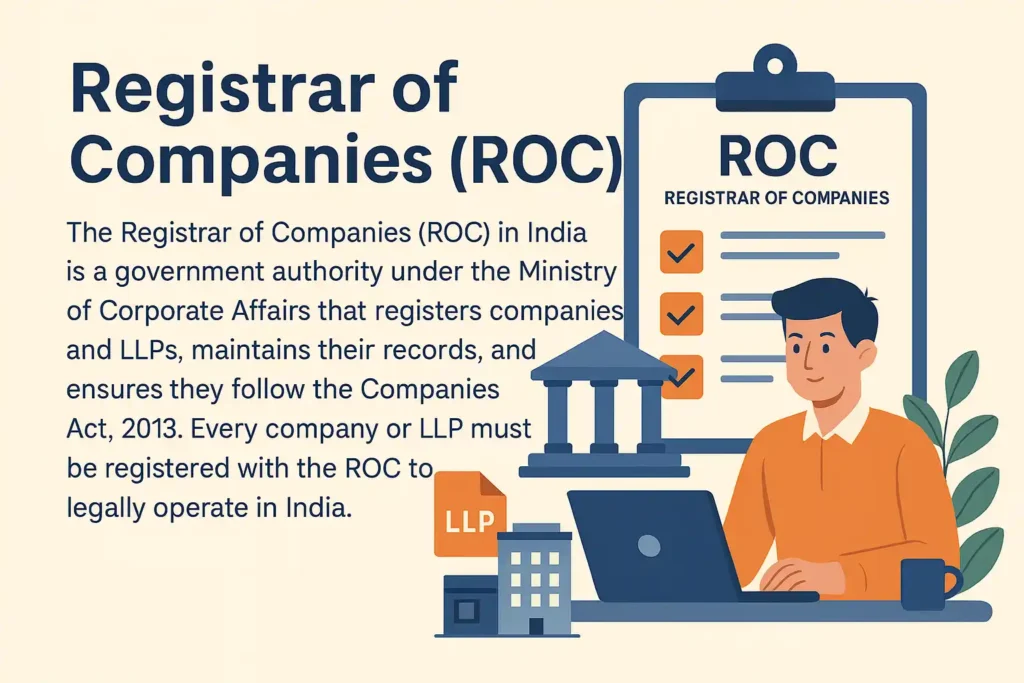
They are different from the forms a company files with the Registrar of Companies (ROC). An MCA filing communicates information to the regulator, while a statutory register preserves the company’s prescribed internal record.
For founders, this distinction matters. A company can have its annual forms filed and still have incomplete internal records. That gap can create problems during audits, due diligence, share transfers or ROC inspections.
The Companies Act, 2013 and rules made under it prescribe different registers. Not every register applies to every company. Some become relevant only when a company issues debentures, gives loans or guarantees, makes specified investments, enters into related-party transactions, buys back securities or issues sweat equity or employee stock options.
This guide explains the main registers, who should maintain them, electronic records, update requirements, penalties and a practical compliance checklist.
What Are Statutory Registers?
A statutory register is a formal company record maintained because a law or rule requires it. It contains prescribed information about the company or a particular corporate event.
Depending on the company and its activities, records may cover:
- Members and shareholders.
- Debenture-holders and other security holders.
- Directors and key managerial personnel (KMP).
- Charges over company assets.
- Loans, guarantees, securities and acquisitions.
- Investments held in another person’s name.
- Director interests and specified related-party arrangements.
- Special transactions such as buy-backs, sweat equity and employee stock options.
A statutory register is not the same as an annual return, AOC-4, DIR-12 or another ROC filing. These compliance documents may contain overlapping information, but each serves a different legal purpose.
Why Are Statutory Registers Important?
Good records create a clear corporate trail. They help the company prove who owned securities, who held office, which approvals were obtained and how specified transactions were handled.
Proper maintenance helps a company track ownership and management changes, support corporate decisions, prepare accurate filings and respond to audits, due diligence or regulatory queries.
What Statutory Registers a Company Must Maintain?
The main registers under the Companies Act, 2013 are explained below. The exact list depends on the company’s type, securities and transactions.
Register of Members
Section 88 requires every company to keep a register of members. It records members and their holdings, including separate details for different classes of equity and preference shares.
Where applicable, the framework also covers registers of debenture-holders and other security holders. The prescribed registers include an index.
The register becomes particularly important when a company allots, transfers or transmits shares, issues securities, buys back shares, consolidates or subdivides shares, or issues renewed or duplicate certificates.
For Section 88 registers, the applicable rules generally require entries within seven days after the Board or its duly constituted committee approves the relevant allotment or transfer.
A startup should reconcile its register of members with its share certificates, cap table, resolutions and relevant ROC filings.
Register of Debenture-Holders and Other Security Holders
A company that issues debentures or other securities covered by the rules must maintain the relevant holder register.
The record provides an authoritative history of the holders and prescribed particulars. A company that has issued only ordinary equity shares may not need a separate debenture-holder register.
This illustrates an important rule: do not assume that every statutory register applies to every company. Build the compliance list around the company’s actual activities.
Register of Directors and Key Managerial Personnel
Section 170 requires every company to keep a register containing prescribed particulars of its directors and KMP, including relevant securities held by them in the company and specified related companies.
This record should remain current after appointments, cessations and other relevant changes.
The register also connects with broader director compliance. If your company is appointing a new director, Lawizer’s Appointment of Director and DIR-12 Filing service can assist with documentation and the ROC process.
For background on director roles, founders can also read Lawizer’s guide to co-founder and director rights.
Register of Charges
Section 85 requires every company to keep a register of charges at its registered office. It covers charges and floating charges affecting company property or assets, with prescribed particulars.
A charge can arise when a lender receives security over company assets. For example, a bank facility may be secured against property, plant, machinery or another asset.
The instrument creating the charge must also be kept with the register. Therefore, charge compliance is not just an MCA filing task. The register, underlying loan documents and ROC records should remain consistent.
Register of Loans, Guarantees, Securities and Acquisitions
Section 186(9) requires a company giving a loan, giving a guarantee, providing security or making an acquisition covered by the section to keep a register.
Rule 12 of the Companies (Meetings of Board and its Powers) Rules, 2014 prescribes Form MBP-2. The record can include:
- Nature and date of the transaction.
- Name and address of the relevant person or body corporate.
- Amount and purpose.
- Approval details.
- Interest rate and maturity information for loans.
- Details of securities or acquisitions.
The rules require chronological entries within the prescribed period and provide for permanent preservation of the register.
Register of Investments Not Held in the Company’s Own Name
Section 187 and the relevant rules address investments beneficially held by a company but not held in its own name.
Where applicable, the prescribed register, commonly Form MBP-3, records details such as:
- The investment.
- The person or depository in whose name it is held.
- The reason it is not held in the company’s own name.
- The relationship or arrangement under which it is held.
This is a transaction-specific requirement. It does not mean every company must have investments registered in another person’s name.
Register of Contracts or Arrangements in Which Directors Are Interested
Section 189 requires one or more registers for specified contracts or arrangements in which directors are interested and certain related-party transactions. The prescribed record is commonly maintained in Form MBP-4.
Depending on the transaction, entries can cover:
- Entities in which a director has a prescribed concern or interest.
- Contracts or arrangements covered by director-interest provisions.
- Related-party transactions covered by Section 188.
The register has Board-placement and inspection requirements. It is particularly important because related-party transactions can create conflicts of interest.
Register of Significant Beneficial Owners
Section 90 deals with significant beneficial ownership. Where the statutory conditions apply, a company must maintain the prescribed register of significant beneficial owners.
The purpose is to identify individuals who ultimately hold significant beneficial interests or exercise significant influence or control, subject to the applicable thresholds, definitions and exemptions.
This area can become complex when ownership passes through companies, trusts or other arrangements. A simple shareholder list may not be enough where legal and beneficial ownership differ.
Transaction-Specific Registers
Some registers arise only when a company undertakes a particular transaction. Examples include:
- SH-2: Register of Renewed and Duplicate Share Certificates.
- SH-3: Register of Sweat Equity Shares.
- SH-6: Register of Employee Stock Options.
- SH-10: Register of Shares or Other Securities Bought Back.
These are not universal registers for every private company. If a company has never undertaken the relevant transaction, the corresponding register may not apply.
However, once the transaction occurs, the company should identify and maintain the applicable record promptly.
Can Statutory Registers Be Maintained in Electronic Form?
Section 120 of the Companies Act, 2013 provides for documents, records, registers and minutes to be kept in electronic form in the prescribed manner.
Rule 27 of the Companies (Management and Administration) Rules, 2014 specifically addresses electronic records for listed companies and companies having at least 1,000 shareholders, debenture-holders and other security holders. The rule was amended so that this provision uses “may” rather than “shall”.
Electronic records must still satisfy applicable requirements. They should be readable, retrievable and reproducible, with digital authentication used where required.
For practical compliance, use:
- Controlled access.
- Regular backups.
- Change and version controls.
- Protection against unauthorised alteration.
- A reliable update trail.
- Secure storage of supporting documents.
Who Is Responsible for Maintaining Statutory Registers?
The company is responsible for maintaining the records required by law. The Board of Directors has an important oversight role.
Where a Company Secretary is appointed, the CS commonly manages or oversees statutory records and secretarial compliance. A company may also use a CA, CS or lawyer for review and filing support.
A practical responsibility split is:
- Board: oversight and approvals.
- Company Secretary: record management and secretarial compliance, where appointed.
- Finance team: transaction information and supporting records.
- External professionals: review, advice and filing support.
- Directors/founders: ensure corporate events are properly documented.
If a director leaves, the company should update its records and complete the applicable ROC process. Lawizer provides Director Resignation and ROC Filing support for such changes.
How Often Should Statutory Registers Be Updated?
There is no single annual update date for every register. The correct timing depends on the particular register and the event that triggers an entry.
Common triggers include:
- Share allotment or transfer.
- Director appointment or cessation.
- Creation, modification or satisfaction of a charge.
- Loan, guarantee or security transaction.
- Relevant investment.
- Related-party transaction.
- Sweat equity or ESOP issue.
- Buy-back of securities.
For example, the rules for Section 88 registers require entries within seven days after approval of the relevant allotment or transfer by the Board or its committee.
Statutory Registers and Annual Compliance
Statutory registers are only one part of company compliance. Depending on the company, founders may also need to manage:
- Board and shareholder meetings.
- Minutes and resolutions.
- Financial statements.
- Annual returns.
- Auditor-related compliance.
- Director KYC.
- Income-tax obligations.
- GST obligations, where applicable.
Lawizer’s Annual Compliance service supports recurring ROC and company-law compliance.
If the registered office changes, the company may also need to update corporate records. Lawizer provides Change in Registered Office Address support.
If the company increases authorised share capital, its share records should reflect the revised structure. Lawizer provides Increase in Authorized Share Capital support.
Founders can also read Lawizer’s quarterly legal audit checklist for startups to build a broader compliance review process.
What Happens If a Company Does Not Maintain Required Registers?
The consequence depends on the specific provision. There is no single penalty for every statutory register.
For example, Section 88 contains a specific penalty for failure to maintain the covered registers of members, debenture-holders or other security holders. The company can be liable to a penalty of ₹3 lakh, while an officer in default can be liable to ₹50,000.
Section 85 deals with the register of charges, while Section 86 provides the relevant penalty framework for contraventions of that chapter.
Section 186 has separate consequences for contraventions relating to loans, guarantees, securities and acquisitions. Section 189 also provides a penalty for a director who fails to comply with that section and its rules.
Therefore, founders should not rely on a generic penalty figure. The result depends on the register, provision, facts and nature of the default.
Poor records can also create business problems:
- Delayed investor due diligence.
- Difficulty verifying share ownership.
- Extra audit or professional work.
- Delays in bank or lender due diligence.
- Longer responses to ROC queries.
- Corrective documentation before corporate transactions.
Common Mistakes to Avoid
- Treating MCA filing as a substitute for the internal register.
- Updating records long after the transaction.
- Failing to reconcile the cap table with the register of members.
- Forgetting to update director records after appointment or resignation.
- Keeping supporting documents in different places with inconsistent information.
- Assuming every register applies to every company.
- Using electronic records without proper backups and access controls.
- Reconstructing records only when an auditor or investor asks.
- Ignoring transaction-specific registers after ESOP, buy-back or sweat-equity activity.
- Failing to review older entries when correcting a current compliance issue.
Statutory Registers a Company Must Maintain: Practical Checklist
Use this checklist during a periodic review:
- Register of members is current.
- Debenture/security-holder records are maintained where applicable.
- Director and KMP particulars are current.
- Director shareholding information is reconciled.
- Charges are properly recorded.
- Section 186 transactions are recorded where applicable.
- MBP-3 requirements are checked where relevant.
- Director-interest and related-party records are updated.
- Significant beneficial ownership requirements are reviewed.
- SH-2, SH-3, SH-6 or SH-10 are maintained where applicable.
- Supporting resolutions and documents are preserved.
- Internal records are reconciled with relevant MCA filings.
- Electronic records are backed up securely.
- A periodic professional compliance review is scheduled.
Statutory Registers for Private, Public and Listed Companies
The basic company-law framework applies across company types, but the exact compliance burden differs.
A private limited company will commonly have core records such as the register of members and director/KMP register, plus conditional registers based on its transactions.
A public company can have additional governance and disclosure obligations.
A listed company also has securities-market and listing-related requirements. SEBI regulations and applicable listing rules may impose additional record-keeping and disclosure requirements beyond the Companies Act.
Is It Compulsory to Register a Company?
If you want to operate as an incorporated company, the entity must be incorporated under the Companies Act and registered with the ROC.
However, not every business needs to be incorporated as a company. A founder may consider a sole proprietorship, partnership, LLP or OPC depending on eligibility, liability, funding plans and compliance needs.
Lawizer offers Private Limited Company Registration, One Person Company Registration and LLP Registration services.
A business can operate under a structure other than a company, but GST, local licences, tax registrations and other requirements can still apply depending on the facts. Founders comparing structures can read Lawizer’s Private Limited vs LLP vs Sole Proprietorship guide.
Frequently Asked Questions
What are the statutory registers a company must maintain?
The main records include the register of members; debenture and other security-holder registers where applicable; register of directors and KMP; register of charges; Section 186 register of loans, guarantees, securities and acquisitions; MBP-3 for specified investments not held in the company’s own name; MBP-4 for specified director-interest and related-party matters; and transaction-specific registers such as SH-2, SH-3, SH-6 and SH-10.
What are the statutory registers that a company is required to maintain?
The required registers depend on the Companies Act, applicable rules, company type and transactions. A private company with only ordinary equity shares will not necessarily maintain every transaction-specific register.
What are the statutory registers that a company must keep?
A company must maintain the registers that apply to it under the Act and relevant rules. The register of members and director/KMP register are central records, while other registers arise from specific transactions or ownership situations.
What are the statutory requirements for a company?
They include maintaining required records, filing prescribed ROC forms, holding applicable meetings, preparing financial statements and meeting tax and other regulatory obligations.
What are statutory rules?
Statutory rules are rules made under authority granted by legislation. The Companies Act, 2013 is supplemented by rules covering areas such as management and administration, share capital, board powers and charges.
What does statutory mean?
Statutory means created, required or governed by law. A statutory register is a record the law requires a company to maintain in the prescribed manner.
What is statutory or mandatory?
A requirement is statutory when it comes from a legal provision. Mandatory means that the company must comply when the provision applies to it.
Can statutory registers be maintained in electronic form?
The Companies Act provides for electronic maintenance of documents and records in the prescribed manner. Section 120 and Rule 27 are relevant. Electronic records should remain complete, secure, readable, retrievable and capable of being produced when required.
What are the mandatory statutory registers maintained under the Companies Act, 2013?
There is no single register list that applies identically to every company. Core records include the register of members and the register of directors and KMP, while other registers depend on securities, charges, investments, loans, related-party transactions and other corporate actions.
What are the statutory registers required to be maintained by a listed company?
A listed company must maintain applicable Companies Act records and comply with additional securities-market and listing requirements. The exact record set should be checked against its current SEBI and listing obligations.
What is the penalty for not maintaining statutory registers under the Companies Act, 2013?
There is no single penalty for every register. The penalty depends on the relevant section and default. Section 88, for example, contains a specific penalty for the covered security-holder registers, while other provisions have their own consequences.
Conclusion: Keep Your Company Records Audit-Ready
Statutory registers are a basic but important part of running a compliant company in India. They help establish who owns the company, who manages it, what securities have been issued, what assets are charged and how specified corporate transactions have been handled.
The goal is not to collect every possible register and leave them untouched. Instead, identify which records apply to your company, update them when corporate events occur, preserve supporting documents and reconcile them periodically with your filings and accounts.
If you are unsure whether your company’s records are complete, a professional compliance review can help identify gaps before they become a problem.
Lawizer can assist with incorporation, director changes, annual ROC compliance and related corporate compliance needs. Explore the Annual Compliance service or contact Lawizer for guidance based on your company’s specific requirements.
Official Legal References
For the statutory text, refer to the Companies Act, 2013 on India Code and the Ministry of Corporate Affairs for current MCA notifications, forms and filing information.
Legal note: This article is for general information and is not a substitute for professional legal advice. Company-law requirements can change, and applicability may depend on the company’s type, transactions and current regulatory status. The Corporate Laws (Amendment) Bill, 2026 contains proposed changes and should not be treated as current law unless enacted and brought into force.