Trademark Registration in India: Cost, Process, and Timeline.
Over 5.5 lakh trademark applications were filed in India in FY 2024–25 — a 20% jump from the previous year, according to the CGPDTM’s own Annual Report. That number tells you something: founders across Bengaluru, Mumbai, Delhi, and Kolkata have figured out that a brand without a registered trademark is a brand anyone can copy. […]
Over 5.5 lakh trademark applications were filed in India in FY 2024–25 — a 20% jump from the previous year, according to the CGPDTM’s own Annual Report. That number tells you something: founders across Bengaluru, Mumbai, Delhi, and Kolkata have figured out that a brand without a registered trademark is a brand anyone can copy.
Here’s the thing. Most founders assume trademark registration is expensive, slow, or something to sort out “later.” This guide will show you exactly why later is the wrong answer — and precisely what it costs, how the process works, and how long you’re actually looking at.
What You’ll Learn
- Exactly what trademark registration costs in 2025, broken down by applicant type
- The step-by-step process from trademark search to certificate issuance
- How long each stage takes — and how to speed things up
- What TM ™ vs ® actually means for your brand legally
- The most common mistakes founders make when filing
[H2] What Is a Trademark — and Why Does Registration Matter?
A trademark is any mark — a name, logo, slogan, colour, or even a sound — that distinguishes your goods or services from someone else’s. Think of the word “Swiggy,” the orange of Zomato’s branding, or the tagline “Daag Acche Hain.” These aren’t just design choices; they’re legally protected assets.
Under the Trade Marks Act, 1999 (the primary statute governing trademarks in India), registration gives you exclusive rights to use that mark for the goods or services in the class you’ve registered it under. Without registration, you technically have some common law rights if you’ve been using the mark long enough — but enforcing them is expensive, uncertain, and practically very difficult. A registered trademark, on the other hand, lets you sue for infringement directly, seek damages, and even have customs authorities block counterfeit imports at the border.
What most founders miss: the TM symbol (™) you see on unregistered marks is just a claim of ownership — it has no legal backing. The ® symbol, which stands for “Registered Trademark,” is what you’re entitled to use only after your mark is officially registered by the Registrar of Trade Marks under the CGPDTM (Controller General of Patents, Designs and Trade Marks). Using ® before registration is actually a criminal offence under Section 107 of the Trade Marks Act.
Another thing worth knowing: trademark protection lasts 10 years from the date of filing and is renewable indefinitely every decade. It doesn’t expire the way some founders assume it does.
Trademark Registration Cost in India (2025)
Let’s break this down. The government fee structure is straightforward — it’s the professional fee that varies depending on who you go to.
Government Fees (Official, 2025)
For Individuals, Startups, and Small Enterprises (proprietorships, partnership firms, or companies registered under the Startup India scheme): ₹4,500 per class, per application, when filed online. The physical filing fee is ₹5,000.
For Companies, LLPs, and other entities that don’t qualify as startups or small enterprises: ₹9,000 per class, per application, when filed online. The physical filing fee is ₹10,000.
The word “class” here is important. Trademarks in India are categorised into 45 classes under the Nice Classification system — Classes 1 to 34 cover physical goods, and Classes 35 to 45 cover services. If your business spans multiple categories — say, you sell clothing (Class 25) and also run an online retail platform (Class 35) — you need separate applications and separate fees for each class.
Professional Fees
Professional fees from trademark agents or online legal services typically range from ₹1,500 to ₹8,000 per application, depending on the complexity of your case and the service provider. Adding professional fees to the government fee, most founders registering a single-class trademark end up paying between ₹6,000 and ₹17,000 all-in.
A quick example: a Bengaluru-based SaaS startup registering its brand name under Class 42 (software services) through Lawizer’s online trademark registration service would pay the ₹4,500 government fee plus a professional fee — no office visits, no notarised affidavits required upfront.
It’s worth noting that some services advertise very low prices by separating out “additional” fees — always check whether the quoted price includes the government fee or is over and above it.

The Trademark Registration Process in India — Step by Step
The entire process runs through the CGPDTM’s online portal at ipindia.gov.in. Here’s what each stage looks like.
Step 1: Trademark Search
Before you file, you need to check whether a similar or identical mark already exists in your class. You can do this for free on the Trade Marks Registry’s public search tool at ipindiaonline.gov.in. Search for your proposed name, logo, or tagline across the relevant class. This step saves you from filing an application that’s likely to be rejected at examination. A professional trademark search also looks for phonetically similar marks — not just exact matches — which is where most amateur searches fall short.
Step 2: Filing the Application
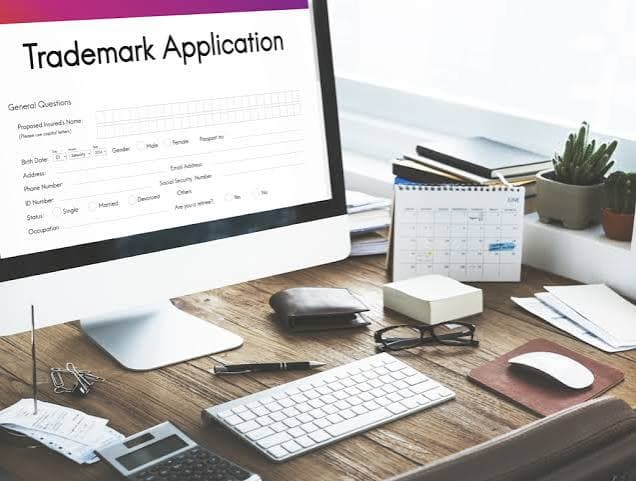
Applications are filed online via the CGPDTM portal using Form TM-A. You’ll need to provide the applicant’s details, a representation of the mark (logo file in JPEG format if it’s a device mark), the relevant class or classes, and a description of the goods or services. For startups, you’ll also need a certificate or declaration confirming your startup status to access the lower government fee. Once the application is submitted and the fee is paid, you receive an official filing receipt with your application number. From this point, you’re entitled to use the TM symbol next to your brand.
Step 3: Examination
After filing, the application is assigned to a trademark examiner at one of the five Trade Marks Registry offices — Mumbai (the head office), Delhi, Kolkata, Chennai, or Ahmedabad. The examiner reviews the mark for absolute grounds of refusal (marks that are descriptive, generic, or offensive) and relative grounds (conflict with existing registered or pending marks). An examination report is typically issued within a few months. If the examiner raises objections, you have one month to file a written reply. If the reply doesn’t satisfy the examiner, a hearing is scheduled.
Step 4: Publication in the Trade Marks Journal
If the mark clears examination (or after objections are resolved), the application is published in the Trade Marks Journal — the official weekly gazette of the Trademark Registry. This is a public notice period. Any third party who believes your mark conflicts with theirs has four months from the date of publication to file a Notice of Opposition.
Step 5: Opposition (if any)
If an opposition is filed, the Registry initiates opposition proceedings, which can be lengthy. Both parties submit evidence, file counter-statements, and may be called for hearings. Opposed applications can add a year or more to the overall timeline. If no opposition is filed within the four-month window, the application proceeds automatically.
Step 6: Registration
Once the opposition window passes without challenge (or if any challenge is successfully defeated), the Registrar issues the Registration Certificate. Your mark is now a registered trademark, indicated by the ® symbol, valid for 10 years from the original application date.
Trademark Registration Timeline — What to Realistically Expect
Here’s where a lot of founders get frustrated. The formal timeline sounds short on paper; the practical reality is longer.
Under standard processing, the total time from filing to registration is typically 12 to 18 months if the application is uncomplicated — no objections at examination, no opposition during publication.
In 2024 and 2025, however, the Trade Marks Registry faced significant staff shortages and administrative backlogs, which pushed examination timelines out considerably. Many applications filed in 2024 are still at the examination stage as of mid-2026.
The good news: there’s a legal mechanism to speed this up. Under Rule 39 of the Trade Marks Rules, 2017, you can file for expedited examination by paying an additional fee. With expedited processing, examination typically happens within a few weeks — sometimes under a month — and the overall timeline to registration can come down to under a year, assuming no opposition.
Let’s break this down stage by stage:
- Trademark Search: 1 to 3 days (you can do it yourself for free, or get a professional search report within 24–48 hours)
- Filing and receipt of application number: Same day (online filing is instant on the CGPDTM portal)
- Examination and issuance of examination report: 3 to 6 months under standard processing; a few weeks under expedited
- Response to examination objections (if raised): 1 month from date of report, extendable in some cases
- Publication in the Trade Marks Journal: 1 to 3 months after acceptance
- Opposition window: 4 months from the date of publication (mandatory waiting period)
- Registration and certificate issuance: 1 to 2 months after the opposition window closes without a challenge
- Total (uncomplicated application, standard processing): 12 to 18 months
- Total (expedited, no opposition): 6 to 10 months
One important point: from the moment you file, your trademark protection is backdated to the filing date. Even if registration takes 18 months, your rights are counted from Day 1. This is why filing early matters — and filing with accurate details matters even more.

Documents Required for Trademark Registration
The documentation list for online trademark filing is shorter than most founders expect.
For all applicants: a clear representation of the trademark (a JPEG file of the logo, or the word mark written out), the list of goods or services the mark covers, and the applicant’s name and address.
For individuals and sole proprietorships: a copy of the applicant’s identity proof (Aadhaar, PAN, or passport).
For companies and LLPs: incorporation certificate and authorisation letter or board resolution authorising the filing.
For startups claiming the concessional ₹4,500 fee: a DPIIT (Department for Promotion of Industry and Internal Trade) recognition certificate under the Startup India scheme, or an MSME Udyam Registration Certificate.
If you’re appointing a trademark agent or legal service to file on your behalf, you’ll also need to sign a Power of Attorney (Form TM-48), which is a straightforward one-page document.
No notarisation is required for online filings, and you don’t need to submit original documents — scanned copies are accepted on the portal.
Common Mistakes Founders Make — and How to Avoid Them
Choosing a descriptive mark. A mark like “BestShoes.in” or “QuickDeliver” will almost certainly be rejected at examination because it merely describes the product or service. A trademark needs to be distinctive — either invented (like “Infosys” or “Flipkart”) or suggestive in a non-obvious way. If your proposed brand name describes exactly what you do, consider modifying it before filing.
Filing in the wrong class. This is a costly error. If you run a food delivery platform and only register in Class 30 (food products) but not Class 43 (restaurant services) or Class 35 (advertising and business services), you’re not fully protected. Worse, you’ll have to file fresh applications and pay fresh fees to cover the missed classes — and competitors could potentially register in those classes before you do.
Not filing early enough. Some founders wait until their business is generating revenue before registering. This is backwards. The earlier you file, the earlier your protection date. A competitor who files the same mark a week before you does gets priority, even if you’ve been using the name longer (with some common law exceptions).
Ignoring the examination report. The Registry doesn’t chase you. If you miss the one-month window to respond to an examination report, your application is treated as abandoned. Set calendar reminders from the day you file — or work with a service provider who tracks this on your behalf.
Filing without a prior art search. Skipping the search and filing directly is a gamble. A conflict with an existing mark doesn’t just result in rejection — it can also mean an opposition proceeding if the existing mark holder files against you, which can be expensive to defend.
Frequently Asked Questions
Q: How much does trademark registration cost in India in 2025?
A: The government fee for trademark registration in India is ₹4,500 per class for individuals, startups, and small enterprises when filing online, and ₹9,000 per class for companies and LLPs. Adding professional or service fees, the all-in cost typically ranges from ₹6,000 to ₹17,000 per class depending on the service provider you use. Startups recognised under the DPIIT’s Startup India programme and MSME Udyam holders are eligible for the lower ₹4,500 rate.
Q: How long does trademark registration take in India?
A: Trademark registration in India takes 12 to 18 months under standard processing, assuming no examination objections and no opposition during the public notice period. With expedited examination (available under Rule 39 of the Trade Marks Rules, 2017), the overall timeline can be reduced to 6 to 10 months. Complications like an examiner’s objection or a third-party opposition can extend the timeline significantly — in some contested cases, the process can take 2 to 3 years.
Q: Can I use the ™ symbol before my trademark is registered?
A: Yes — you can use the TM (™) symbol as soon as you file your trademark application, or even if you’re simply claiming ownership of an unregistered mark. However, you can only use the ® (Registered Trademark) symbol after your application has been fully processed and a registration certificate has been issued by the Trade Marks Registry. Using ® before registration is an offence under Section 107 of the Trade Marks Act, 1999.
Q: What classes should I register my trademark under?
A: The class you register under depends on the nature of your business. Trademarks in India follow the Nice Classification system, which divides goods and services into 45 classes. Software and technology companies typically file under Class 42, retail businesses often need Class 35, food businesses may need Classes 29, 30, or 43, and apparel brands typically use Class 25. Many businesses need protection in more than one class. A trademark agent can help you identify the right classes for your specific business model before you file.
Q: What happens if someone opposes my trademark application?
A: If a third party files a Notice of Opposition within four months of your trademark’s publication in the Trade Marks Journal, the Registry initiates opposition proceedings. Both sides submit evidence, file counter-statements, and attend hearings before the Registrar. If your mark successfully survives the opposition, registration proceeds. If not, you may need to file a fresh application with amendments. Legal representation is strongly advisable in opposition proceedings.
Q: Is trademark registration the same as copyright registration in India?
A: No — trademark and copyright are different forms of intellectual property. A trademark protects brand identifiers like names, logos, and slogans in a specific class of goods or services. Copyright automatically subsists in original creative works (like written content, music, or software code) from the moment of creation, but registration under the Copyright Act, 1957 creates an official record of ownership and is useful in infringement proceedings. Most businesses need both — trademark protection for their brand identity and copyright protection for their creative output.
Ready to protect your brand with a registered trademark?
Lawizer’s experts handle the entire trademark registration process — from prior art search and application filing to examination responses and status tracking — fully online, starting at just ₹4,500 in government fees. No CA visit needed.