
How Long to Register a Company in India
How long to register a company in India? The practical answer is that there is no single guaranteed number of days for every application. A straightforward incorporation can move quickly once the documents, proposed name and digital signatures are ready, while name objections, document mismatches or MCA resubmission requests can extend the process. The process […]
How long to register a company in India? The practical answer is that there is no single guaranteed number of days for every application. A straightforward incorporation can move quickly once the documents, proposed name and digital signatures are ready, while name objections, document mismatches or MCA resubmission requests can extend the process.
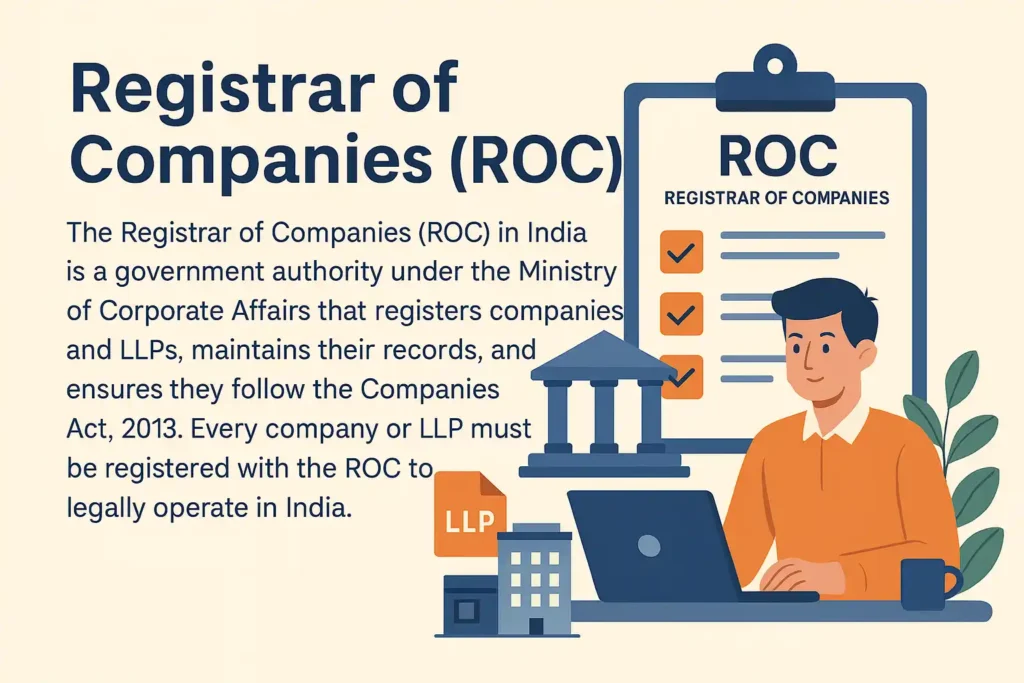
The process is handled online through the Ministry of Corporate Affairs (MCA) using the company incorporation framework, including SPICe+ and linked filings. The MCA’s guidance stresses accurate, legible documents and valid digital signatures because errors can prevent a clean submission.
For founders, the most useful way to think about the timeline is in stages: choosing the structure, preparing documents, checking the name, filing the incorporation application, responding to any MCA query, and receiving the Certificate of Incorporation.
How long to register a company in India? Quick answer
There is no universal guaranteed turnaround that applies to every company. A clean application may be processed relatively quickly, but the total calendar time depends on the application, the proposed name, document quality and whether the MCA asks for corrections.
The MCA has described speedy processing as an objective for incorporation services, but that should not be treated as a promise that every application will be approved on the same day or within a fixed number of days.
As a practical planning rule, keep some buffer rather than building a launch date around a one-day approval assumption. If the application is returned for resubmission, the timeline can move beyond the original estimate.
Company registration timeline at a glance
- Decide the business structure.
- Prepare director and shareholder information.
- Arrange DSC and other required details.
- Select and check the proposed company name.
- Prepare the registered-office documents.
- Complete the incorporation forms and linked filings.
- Submit the application to MCA.
- Respond to any clarification or resubmission request.
- Receive the Certificate of Incorporation after approval.
The important point is that some steps are controlled by the founders and some are controlled by the authorities. Good preparation reduces the avoidable part of the delay.
How long does company incorporation take at each stage?
Choose the business structure
Before filing, decide whether a Private Limited Company, OPC or LLP is appropriate. The structure affects the number of founders, governance, ownership, fundraising options and ongoing compliance.
A Private Limited Company generally requires at least two directors and two members. An OPC has a single member and at least one director. An LLP is governed under a separate law and has designated partners rather than company directors.
If you are unsure which structure fits, read Lawizer’s guide on Private Limited Company vs LLP vs Sole Proprietorship before you file. A structure that looks quick to register may not be the best fit for your long-term plans.
Prepare the documents
Document preparation is often where founders can save time. Keep identity and address proofs, photographs, contact details, registered-office evidence and consent documents ready as applicable.
For the registered office, the documents should support the address stated in the incorporation application. Depending on the premises, this may involve ownership or occupancy proof, a utility bill and an NOC from the owner.
Check every spelling, date and address before submission. A mismatch between PAN, identity proof, address proof and the incorporation form can lead to a query or resubmission.
For a detailed checklist, see Lawizer’s guide to documents required for company registration in India.
Reserve and check the company name
A name problem can delay incorporation even when the rest of the application is ready. The proposed name should be distinctive and should not conflict with an existing company, LLP or relevant trademark.
Do not rely only on an MCA name search. A separate trademark check is sensible because company-name approval and trademark protection are different matters.
If your first proposed name is rejected, you may need to revise the name and continue the process. Keeping suitable alternatives ready can help.
For more detail, read Why a company name gets rejected by MCA.
Submit SPICe+ and linked forms
The incorporation application is submitted through the MCA’s electronic system. SPICe+ integrates several incorporation-related services into the filing workflow.
Before submission, check that the latest form version is being used, documents are legible, digital signatures validate correctly and all required fields are completed. These are among the precautions highlighted in MCA’s SPICe+ and linked filings guidance.
MCA review and possible resubmission
After submission, the application is examined. A clean application may move forward without a major issue. If the authority identifies a defect or requires clarification, the application may be sent back for resubmission.
This is one of the biggest reasons you should not promise a client or investor a fixed incorporation date until the Certificate of Incorporation is actually issued.
If a resubmission is requested, read the remarks carefully. Correct the specific issue instead of changing unrelated information. A rushed second submission can create additional inconsistencies.
Certificate of Incorporation
Once the application is approved, the company receives its Certificate of Incorporation and corporate identification details. This is the point at which the company legally comes into existence as the incorporated entity.
The certificate is important, but incorporation is not the end of compliance. New companies may have post-incorporation requirements involving the registered office, commencement of business, bank account, auditor, tax registrations and ongoing filings.
Why can company registration take longer?
Name rejection
A proposed name may be rejected because it is too similar to an existing company or LLP, conflicts with a trademark, uses a restricted expression or does not align with the proposed business activity.
Document mismatch
Small inconsistencies can create large delays. Common examples include different spellings of a director’s name, outdated address proof, unclear documents or an office address that cannot be adequately supported.
DSC or filing issues
Digital signatures and MCA user details need to work correctly. If a DSC is invalid, expired or not properly associated, the filing may not move smoothly.
Resubmission
An MCA query or resubmission means you have another step before approval. The time needed then depends on how quickly the issue is understood, corrected and resubmitted.
Special circumstances
Foreign subscribers or directors, regulated activities, sector-specific approvals, unusual ownership structures or other special circumstances can require additional documentation or review.
How to register a company faster without cutting corners
How long to register a company in India without delays depends heavily on what you do before filing.
Use this checklist:
- Finalise the business structure before preparing the forms.
- Keep all identity and address documents current.
- Verify the registered-office documents.
- Check the proposed name against MCA records and relevant trademark records.
- Keep an alternative name ready.
- Make sure every document uses consistent names and addresses.
- Confirm DSC requirements before submission.
- Use the latest MCA forms and instructions.
- Review the complete application before signing.
- Respond promptly if MCA raises a query.
Speed should never come from skipping a compliance check. A fast filing that is rejected can take longer overall than a careful filing submitted correctly the first time.
Is a CA required for company registration?
A founder does not necessarily need to visit a CA’s office simply because incorporation is an online process. However, incorporation documents and professional certification requirements can apply depending on the filing and circumstances.
Professional help can be useful when there are multiple founders, foreign participants, unusual ownership arrangements, regulated activities, complex registered-office documents or uncertainty about the appropriate structure.
For straightforward incorporation, founders can also review Lawizer’s Private Limited Company Registration service and compare what is included before choosing a service provider.
How much does a CA charge for company registration?
There is no single nationwide professional fee that applies to every incorporation. The total cost can include government filing charges, applicable stamp duty, DSC costs and professional or service fees.
The amount varies with the entity type, authorised capital, state, applicant profile and additional services. Ask for a clear fee breakdown rather than comparing only the headline price.
Can I register a Private Limited Company by myself?
Yes, incorporation is an online process and founders can handle many steps themselves. However, the process still requires accurate documents, digital signatures, statutory declarations and compliance with MCA requirements.
DIY registration may be reasonable for a straightforward domestic structure. Professional assistance can be more useful when there are foreign subscribers, complex shareholding, regulated activities or uncertainty about documents.
Which is better: OPC or Private Limited Company?
An OPC may suit an eligible solo entrepreneur who wants a corporate structure without bringing in a second member. A Private Limited Company is generally more suitable when there are multiple founders or when the business expects to use a conventional equity structure for investment and ownership.
Compare the structures based on:
- Number of founders
- Funding plans
- Ownership structure
- Compliance requirements
- Future expansion
- Investor expectations
There is no universally better option. The right choice depends on the business.
Can an OPC pay salary to its director?
A director can receive remuneration from a company when the payment is permitted and properly approved under the applicable company-law and tax framework. Salary or director remuneration should not be treated as an automatic personal withdrawal from the company’s bank account.
The company should maintain proper records, approvals and tax treatment for payments made to its director.
Can a 17-year-old become a company director?
For incorporation and director filings, a person under 18 should not be treated as an eligible company director. MCA’s DIR-12 filing instructions require the appointment date to be at least 18 years from the person’s date of birth.
The position is different from shareholding. A minor’s ability to hold shares can involve separate legal considerations and should not be confused with eligibility to act as a director.
A Managing Director, Whole-time Director or Manager has an additional statutory age requirement: Section 196 of the Companies Act sets a minimum age of 21 for those roles.
Who has more power: a CEO or a director?
A CEO and a director are not simply two levels of the same hierarchy. A director is part of the company’s statutory Board and participates in governance and board decisions. A CEO is an executive office-holder responsible for management.
In some companies, the CEO may also be a director. The actual division of authority depends on the Companies Act, Articles of Association, board resolutions, employment terms and the company’s governance structure.
Do directors get paid a salary?
Directors may receive remuneration, subject to the applicable Companies Act provisions, approvals and tax treatment. The payment may be structured as remuneration, sitting fees or other permitted forms depending on the director’s role and the company.
Shareholders should also distinguish director remuneration from dividends. A dividend is a distribution to shareholders, while remuneration is payment for services or office subject to applicable rules.
How much tax will I pay as a director?
There is no special single “director tax rate” simply because a person is a director. The tax treatment depends on the nature of the payment, the individual’s total income and the applicable income-tax provisions.
Salary or remuneration, sitting fees, commission and other receipts may have different tax and withholding implications. Directors should review the actual payment structure rather than applying a flat assumption.
What happens if a company has only one director?
A Private Limited Company is generally required to have at least two directors, while an OPC requires at least one. If a Private Limited Company falls below the statutory minimum because of resignation or another event, it should take appropriate steps to restore the required Board strength.
A company does not become an OPC merely because only one director remains.
If a director is resigning, the company should address the resulting Board structure and make the necessary filings. Lawizer also provides director appointment and director resignation support.
Can I just walk away from my limited company?
Stopping business activity does not automatically close a company. An incorporated company continues to have legal and filing obligations unless it is formally closed, struck off or otherwise dealt with under the applicable law.
If the business is no longer required, check whether it qualifies for an appropriate closure or strike-off route. Until the legal process is completed, do not assume that the company’s obligations have disappeared.
Lawizer provides a Private Limited Company closure service for founders considering formal closure.
What happens after company registration?
Receiving the Certificate of Incorporation is an important milestone, but founders should immediately create a post-incorporation compliance checklist.
Registered office
A company must maintain a registered office capable of receiving communications. The Companies Act also contains requirements relating to verification of the registered office.
Commencement of business
For companies having share capital to which Section 10A applies, the director must file the commencement declaration in Form INC-20A within 180 days of incorporation. The company should also satisfy the related requirements before commencing business or exercising borrowing powers.
Read Lawizer’s guide to INC-20A and commencement of business compliance for a more detailed explanation.
Bank account and capital
Complete the company’s banking arrangements and ensure that subscribers meet their agreed subscription obligations. Keep evidence and corporate records properly.
Auditor and statutory records
Complete applicable auditor appointment requirements and maintain the company’s statutory registers, books and resolutions.
Incorporation is not a one-time compliance event. Lawizer’s annual compliance service can be reviewed when setting up a recurring compliance process.
GST registration
Company incorporation and GST registration are separate matters. GST depends on the nature of supplies, aggregate turnover, location and specific mandatory-registration provisions.
As a broad current rule, the commonly applicable threshold is ₹40 lakh for persons engaged exclusively in the supply of goods in states where the higher threshold applies, and ₹20 lakh for services in most states. Special-category states and certain compulsory-registration categories require separate analysis.
Because GST rules can change through notifications, check the current CBIC GST registration guidance before relying on a threshold for a particular business.
You can also read Lawizer’s detailed guide on GST registration for startups.
MSME/Udyam registration
An eligible company may consider Udyam registration after incorporation. It is separate from company incorporation and is intended to recognise eligible micro, small and medium enterprises.
For more information, see Lawizer’s guide to MSME Udyam registration.
Trademark protection
Registering a company name does not by itself give you the same protection as trademark registration. If your brand matters, consider a trademark search and registration strategy early.
Lawizer provides trademark registration services for founders who want to protect their brand.
Startup India
An eligible startup may separately consider DPIIT Startup India recognition. Incorporation alone does not automatically grant every Startup India benefit.
Company registration checklist
Before filing
- Choose the appropriate legal structure.
- Confirm the founders, shareholders and directors.
- Prepare identity and address proofs.
- Prepare registered-office documents.
- Check the company name.
- Check relevant trademarks.
- Arrange DSCs.
- Prepare MOA/AOA and required declarations.
- Complete SPICe+ and linked forms.
- Review every detail before submission.
After incorporation
- Obtain and preserve the Certificate of Incorporation.
- Complete banking and capital-related formalities.
- Verify the registered office.
- Check whether INC-20A applies.
- Complete applicable auditor and statutory-record requirements.
- Assess GST and other tax registrations.
- Consider Udyam registration if eligible.
- Protect the brand through trademark registration.
- Set up a recurring annual compliance calendar.
Frequently Asked Questions
How long to register a company in India?
There is no single guaranteed timeline. A straightforward application can move quickly, while name issues, document errors, MCA queries and resubmission can extend the process. Plan for several working days and keep a buffer for contingencies rather than relying on a guaranteed number.
How quickly can you create a company?
The legal process is online, but the actual time depends on document readiness, name approval and MCA processing. A complete application is usually easier to process than one that requires corrections.
Is GST mandatory for a Private Limited Company?
No. Incorporation does not automatically make GST registration mandatory. GST registration depends on turnover, the nature and location of supplies, and other statutory conditions.
Is GST registration mandatory for an OPC?
Not merely because the entity is an OPC. The same GST rules and mandatory-registration provisions must be applied to the business activity and circumstances.
At what turnover is GST compulsory?
The threshold depends on the nature of supply and location. For many businesses, the commonly applicable thresholds are ₹40 lakh for exclusive goods suppliers in states adopting the higher threshold and ₹20 lakh for services, with lower thresholds in specified special-category states. Certain categories can have registration obligations regardless of ordinary turnover thresholds.
Who is not eligible or liable for GST registration?
Businesses making only supplies that are wholly exempt or otherwise outside the registration requirement may not need registration. However, exemptions and compulsory-registration provisions are fact-specific, so founders should check the current GST rules before deciding.
Can an OPC pay salary to its director?
Yes, remuneration may be paid to a director where legally permitted and properly documented. The payment should follow applicable company-law, accounting and tax requirements.
How many directors can an OPC have?
An OPC must have at least one director. The Companies Act also provides a statutory maximum number of directors for companies, subject to the rules for exceeding that limit.
Can I walk away from my limited company?
No. Simply stopping operations does not close an incorporated company. Formal closure or strike-off procedures and applicable compliance steps must be considered.
Is a CA required for company registration?
Professional assistance is not the same as a requirement to physically visit a CA’s office. The incorporation process is online, but certain filings may require professional certification. Complex cases can benefit from professional review.
Who is India’s most famous director?
If the question means a film director rather than a company director, the answer is subjective. Satyajit Ray is widely regarded as one of India’s most influential film directors. This question is separate from corporate directorship.
Final takeaway
The answer to how long to register a company in India depends less on a single promised number and more on the quality of the application. A suitable structure, correct name, complete documents and accurate SPICe+ filing can reduce avoidable delays.
Founders should also plan beyond incorporation. GST, Udyam, trademark protection, director changes, statutory records and annual compliance may become relevant after the Certificate of Incorporation.
If you want help choosing the right structure or preparing an incorporation application, Lawizer can assist with Private Limited Company, OPC and LLP registration and related compliance services. Review the relevant service pages and consult a qualified professional for advice specific to your business.
Official references: Ministry of Corporate Affairs | Companies Act, 2013 on India Code | CBIC GST Registration Rules