SEBI’s New ESOP Rules for Founders: 2025 Update
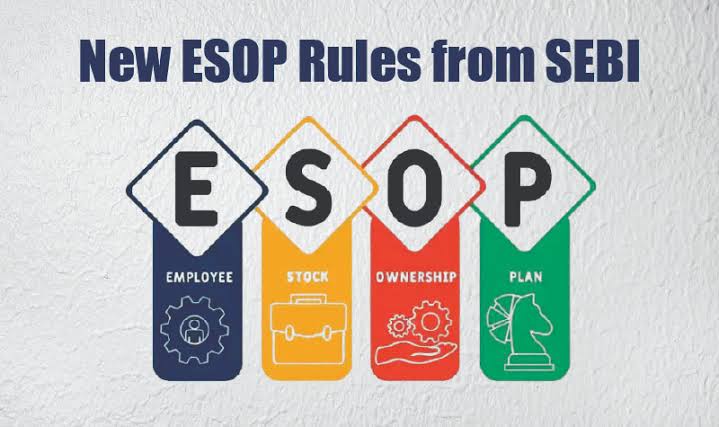
On September 8, 2025, SEBI quietly rewrote the rules on founder ESOPs (Employee Stock Option Plans). These plans let founders buy company shares at a fixed price after a vesting period. The change could save you crores if you’re heading toward an IPO. Founder Vijay Shekhar Sharma had already learned this the hard way, surrendering […]
On September 8, 2025, SEBI quietly rewrote the rules on founder ESOPs (Employee Stock Option Plans). These plans let founders buy company shares at a fixed price after a vesting period. The change could save you crores if you’re heading toward an IPO. Founder Vijay Shekhar Sharma had already learned this the hard way, surrendering ESOPs worth over ₹1,800 crore months earlier.
Hold founder stock options? If your startup has even a remote chance of going public, this regulatory change could significantly impact your personal wealth.
What You’ll Learn
- Why founders were losing their ESOPs right before an IPO
- What Regulation 9A actually says, in plain English
- How the Paytm case pushed SEBI to act
- Who qualifies for this exception — and who doesn’t
- What founders should do differently starting now
The Problem: Why Founders Were Losing Their ESOPs Before an IPO
Here’s the thing. The Companies Act, 2013, and SEBI’s earlier SBEB (Share Based Employee Benefits and Sweat Equity) Regulations, 2021, prohibit promoters from receiving or holding ESOPs. The reasoning is straightforward: ESOPs exist to reward employees, not founders or owners who already control the company.
But most Indian founders don’t start out as “promoters.”In the early, cash-strapped years, startups often grant founders ESOPs because they work as employees, long before anyone considers taking the company public. The trouble starts when the company files its DRHP (Draft Red Herring Prospectus — the preliminary IPO document filed with SEBI) and the founder gets reclassified as a promoter based on their shareholding or board control.
At that point, the old rules forced founders to either exercise or forfeit all the ESOPs they had earned. In some cases, years of unrealised compensation disappeared overnight.
What most founders miss: this wasn’t a hypothetical risk. It was a real, recurring problem that made IPOs financially painful for the very people who built the company.
What Changed: Regulation 9A, Explained Simply
SEBI’s board approved the fix at its 210th board meeting on June 18, 2025, and formally notified it through the SEBI (Share Based Employee Benefits and Sweat Equity) (Amendment) Regulations, 2025 on September 8, 2025. This inserted a brand-new Regulation 9A into the SBEB framework.

The short answer is yes. You can retain and exercise your ESOPs, Stock Appreciation Rights (SARs), or other equity benefits if your company’s DRHP identifies you as a promoter or member of the promoter group, provided the company granted those benefits at least one year before filing the DRHP.
- ESOPs granted more than 12 months before your DRHP filing → protected, you keep them
- ESOPs granted less than 12 months before your DRHP filing → still at risk
- Fresh ESOPs after you’re classified as promoter → still not allowed, this hasn’t changed
This one-year look-back period isn’t arbitrary. It’s SEBI’s way of drawing a line between genuine, long-term employee compensation and last-minute grants dressed up to dodge the promoter restriction just before going public.
The Paytm Case: Why SEBI Finally Acted
A quick example makes this real. Ahead of Paytm’s 2021 IPO, founder Vijay Shekhar Sharma transferred his shares to a family trust and secured non-promoter status in the DRHP. This restructuring allowed him to retain ESOPs that the regulations would otherwise have barred. SEBI later alleged this violated the SBEB Regulations.
The dispute ended in a settlement in May 2025. Sharma surrendered 21 million unvested ESOPs worth over ₹1,800 crore. He also accepted a three-year ban on receiving fresh ESOPs from any listed company. The case exposed the ambiguity that SEBI needed to address. It also directly influenced the one-year cooling-off requirement in Regulation 9A.
Who Actually Qualifies for This Exception?
Let’s break this down into plain conditions. You qualify under Regulation 9A only if all of these are true:
- You’re named as a promoter or promoter-group member in your company’s DRHP
- Your ESOPs, SARs, or other benefits were granted while you were still classified as an employee
- Those grants happened at least one year before the DRHP filing date
- You continue holding or exercising them strictly on their original grant terms
It’s worth separating this from a different, older provision. Under the Companies (Share Capital and Debentures) Rules, 2014, DPIIT-recognised startups (registered under the government’s MSME and startup recognition schemes) can issue ESOPs to promoters for up to 10 years from incorporation. That’s a pre-listing exemption. Regulation 9A is different — it specifically protects what happens after the DRHP is filed and the company is heading toward listing.
What This Means If You’re Planning an IPO
If your startup is even two to three years away from a possible listing, this changes how you should structure ESOP grants today. Founders and CFOs now have a real incentive to formalise ESOP grants early, document grant dates clearly, and avoid any last-minute stock option decisions once IPO conversations start internally.
This change also matters for startups planning a reverse flip. A reverse flip shifts the holding structure from Delaware or Singapore back to India before an IPO on Indian exchanges. Founders in these companies were among the most affected by the old rule. The combination of restructuring and an IPO often required promoter reclassification twice.
One thing hasn’t changed: once you’re classified as a promoter, you still cannot receive fresh ESOP grants. This protects only what you already earned, not what comes next. Founders in Bengaluru, Mumbai, and Delhi startup circles structuring their next funding round should factor this into their company incorporation and cap table planning well before any IPO discussion begins.

Frequently Asked Questions
A: Regulation 9A is a September 2025 amendment to SEBI’s SBEB Regulations that lets founders retain and exercise ESOPs even after being classified as promoters in their company’s IPO documents. It applies only to ESOPs granted at least one year before the DRHP filing date.
A: No. Regulation 9A only protects ESOPs granted before the founder was classified as a promoter. Fresh ESOP grants to promoters are still restricted under both the Companies Act, 2013 and the SBEB Regulations.
A: SEBI acted after cases like Paytm’s, where founder Vijay Shekhar Sharma had to surrender ESOPs worth over ₹1,800 crore due to unclear rules around promoter reclassification. The new rule closes that regulatory gap while keeping a one-year cooling-off period to prevent misuse.
A: No. Regulation 9A only becomes relevant once a company files its DRHP with SEBI for a public listing. Private, unlisted startups continue to follow the Companies Act provisions, including the DPIIT startup exemption allowing promoter ESOPs for up to 10 years from incorporation.
A: Those ESOPs are not protected under Regulation 9A and remain subject to the older restriction, meaning they may need to be exercised or forfeited before the company lists. This is exactly the scenario the one-year cooling-off period was designed to prevent.
A: A company secretary or legaltech platform experienced in SEBI and Companies Act compliance can review your ESOP scheme, grant dates, and cap table to confirm you qualify for protection under Regulation 9A well before your IPO timeline begins.
Lawizer’s experts handle everything — ESOP scheme structuring, company incorporation, and MSME registration — fully online, starting at just ₹999. No CA visit needed.